Málaga’s biodiversity takes flight at night.
From the mountains to the coast, bats connect caves, forests, rivers and cities. These flying mammals locate their prey using ultrasound and contribute to natural insect control. Their conservation depends on three essentials: safe roosts, food and connected landscapes.
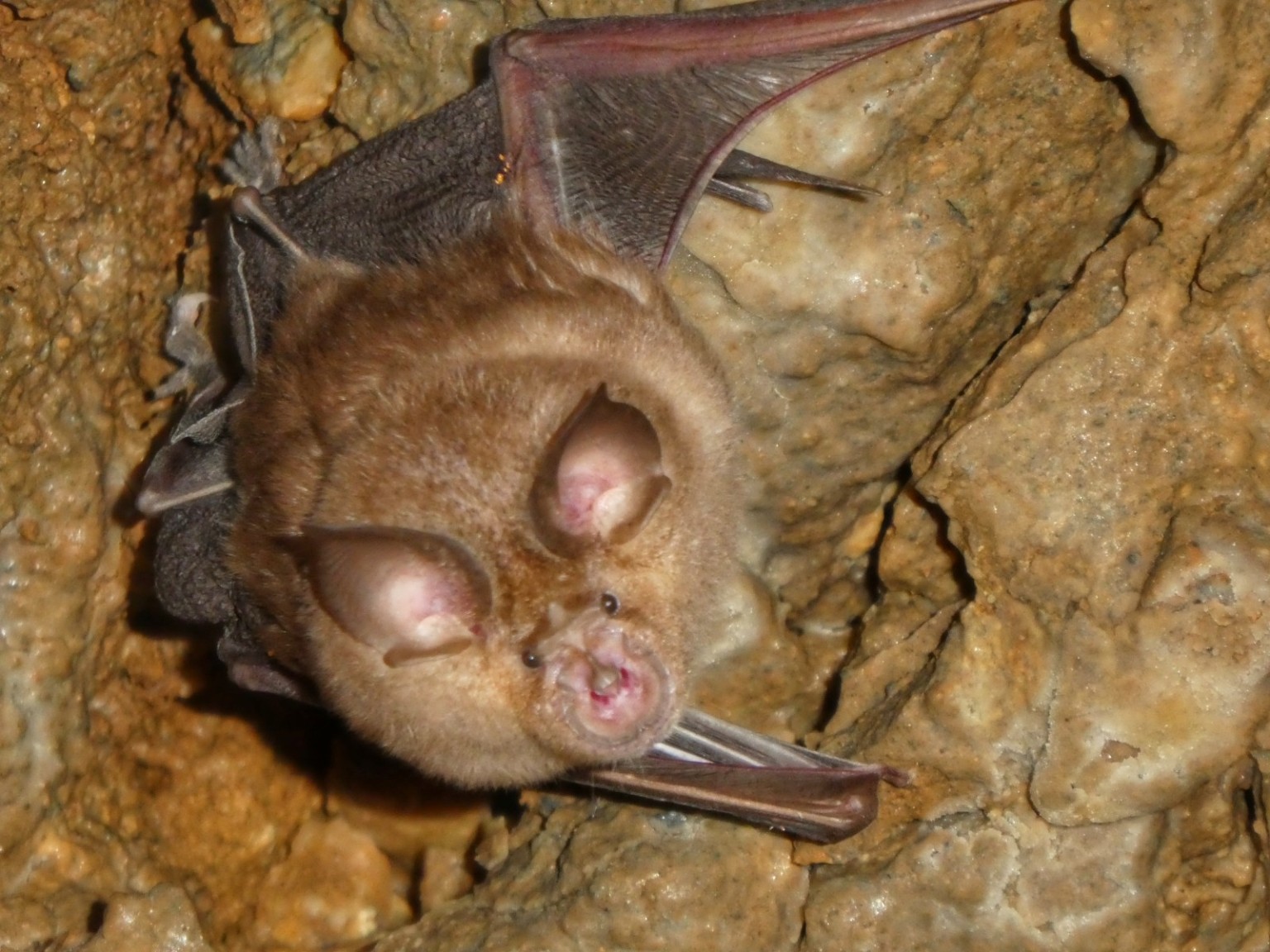
This selection brings together 20 species recorded in Málaga. To help explain their ecology, we group them by the roosts they use. These are broad categories: a species may use several roost types and change them with the seasons.
Select a scientific name to open its EUROBATS profile in a new tab. EUROBATS lists Cnephaeus isabellinus under the name Eptesicus isabellinus.
Roosts and feeding habitats are different. A bat may rest in a cave and forage in woodland, along a river or over farmland.
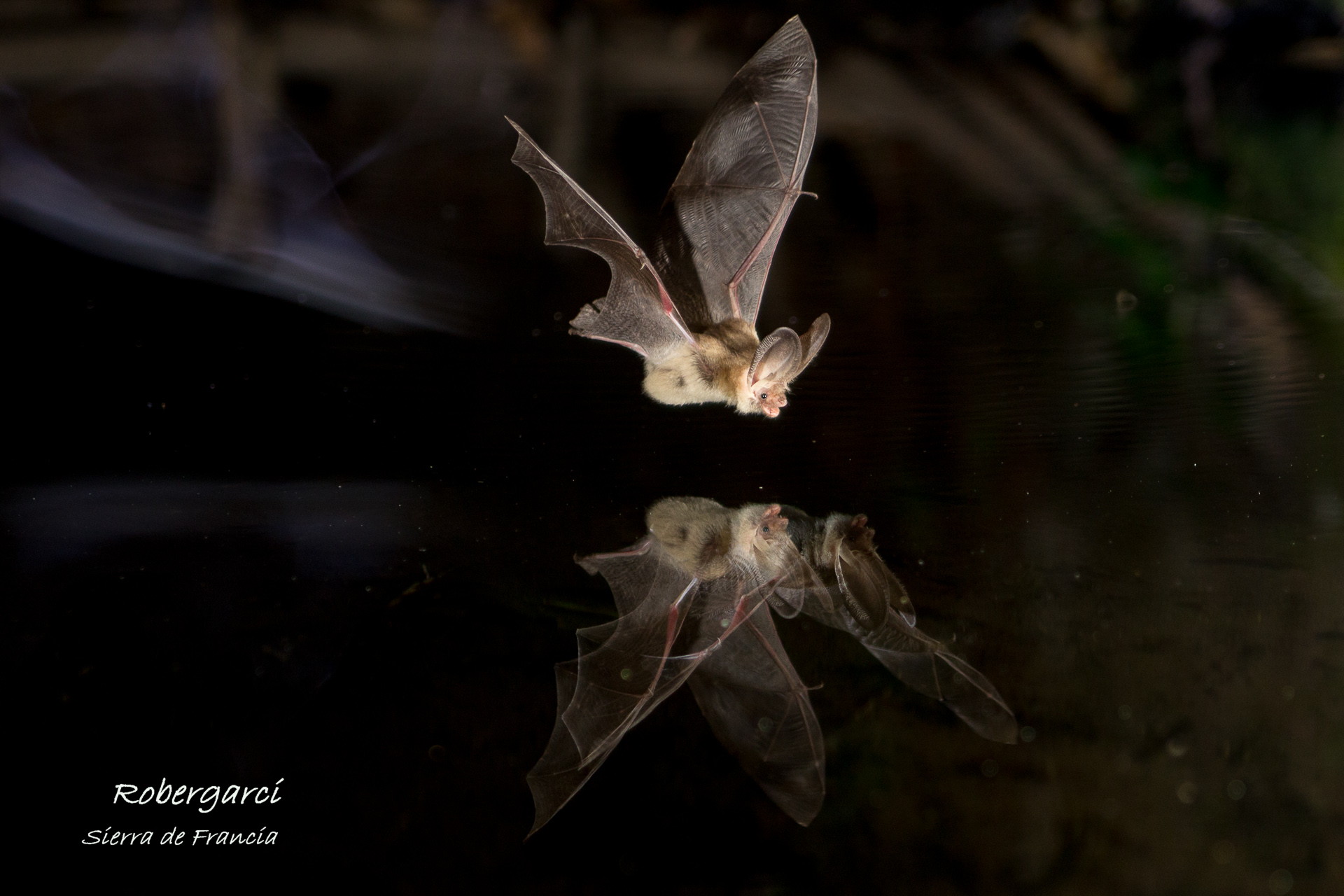
Cave-dwelling bats · Caves and underground sites
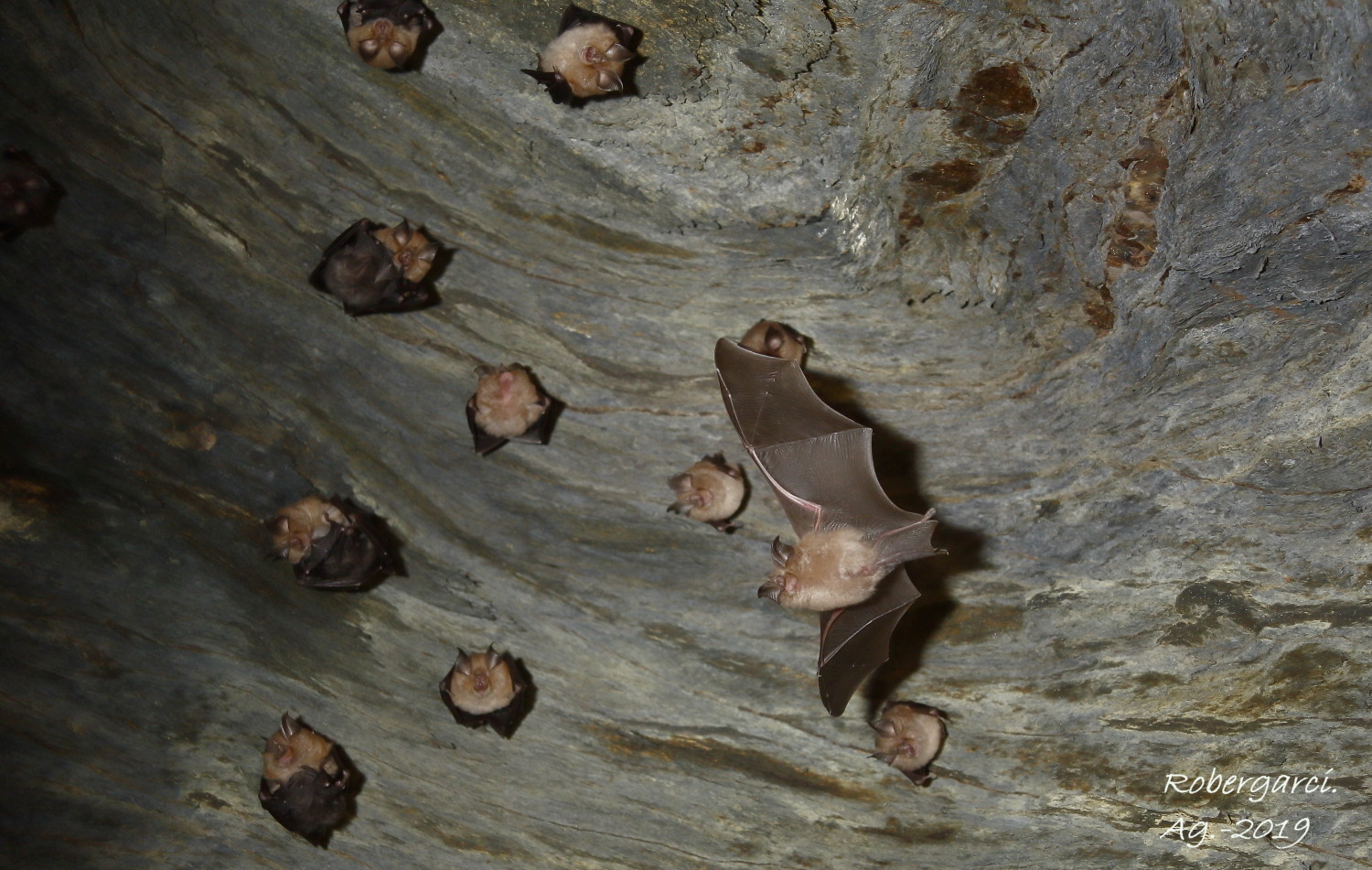
Ten species in this selection are particularly associated with underground roosts. Some also occupy buildings; their use varies by species and region.
- Greater horseshoe bat — Rhinolophus ferrumequinum
- Lesser horseshoe bat — Rhinolophus hipposideros
- Mediterranean horseshoe bat — Rhinolophus euryale
- Mehely’s horseshoe bat — Rhinolophus mehelyi
- Greater mouse-eared bat — Myotis myotis
- Lesser mouse-eared bat — Myotis blythii
- Geoffroy’s bat — Myotis emarginatus
- Escalera’s bat — Myotis escalerai
- Long-fingered bat — Myotis capaccinii
- Schreiber’s bent-winged bat — Miniopterus schreibersii
Conservation priority: prevent disturbance and preserve roost conditions and access.
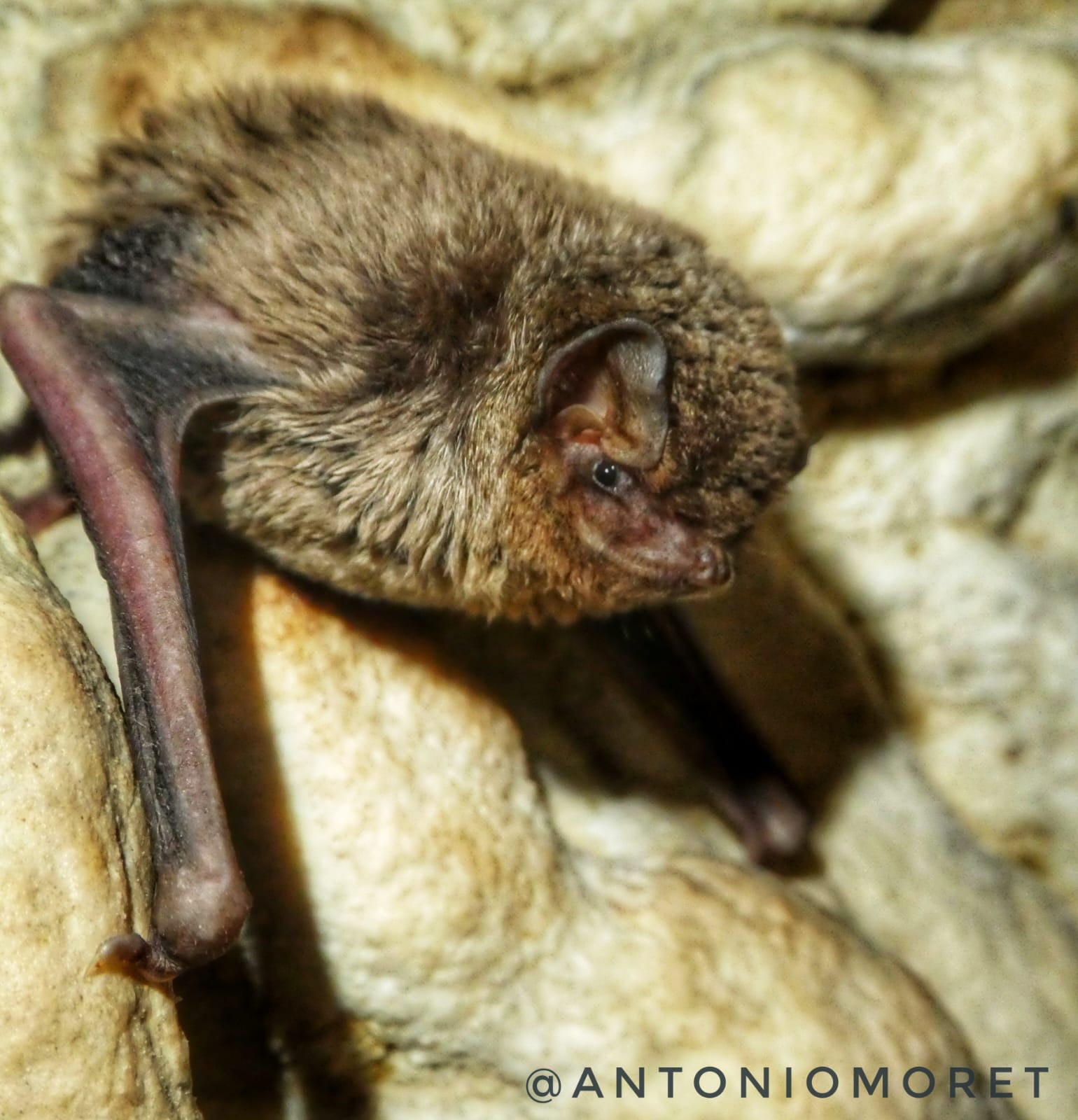
Woodland and tree-roosting bats · Trees as shelter
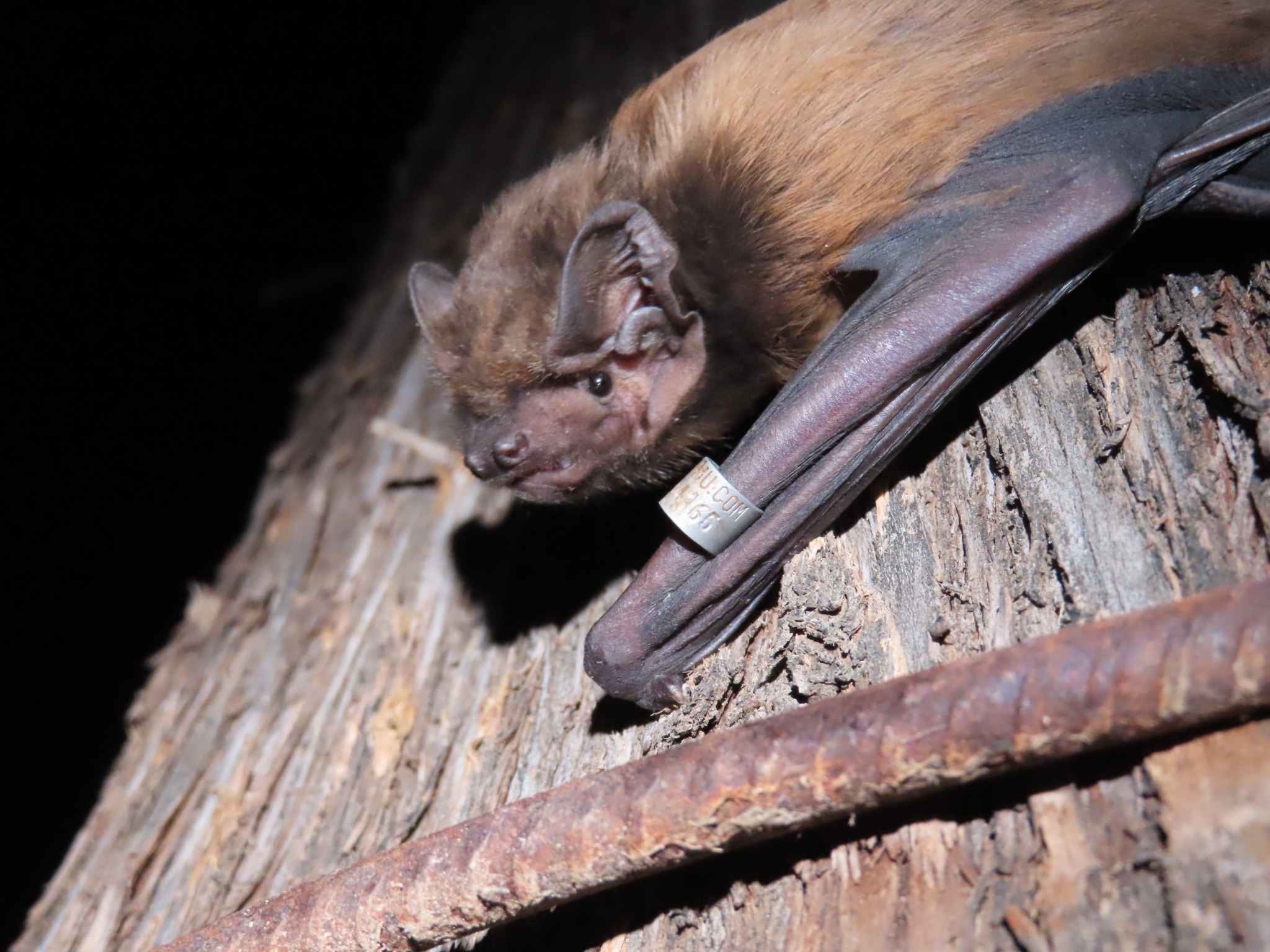
Noctules find shelter in tree cavities. They may also live in parks with mature trees. “Woodland” describes the habitat; “tree-roosting” describes the use of trees as shelter.
- Leisler’s bat — Nyctalus leisleri
- Greater noctule — Nyctalus lasiopterus
Conservation priority: protect roost trees and maintain connected tree cover.
Life in the woodland
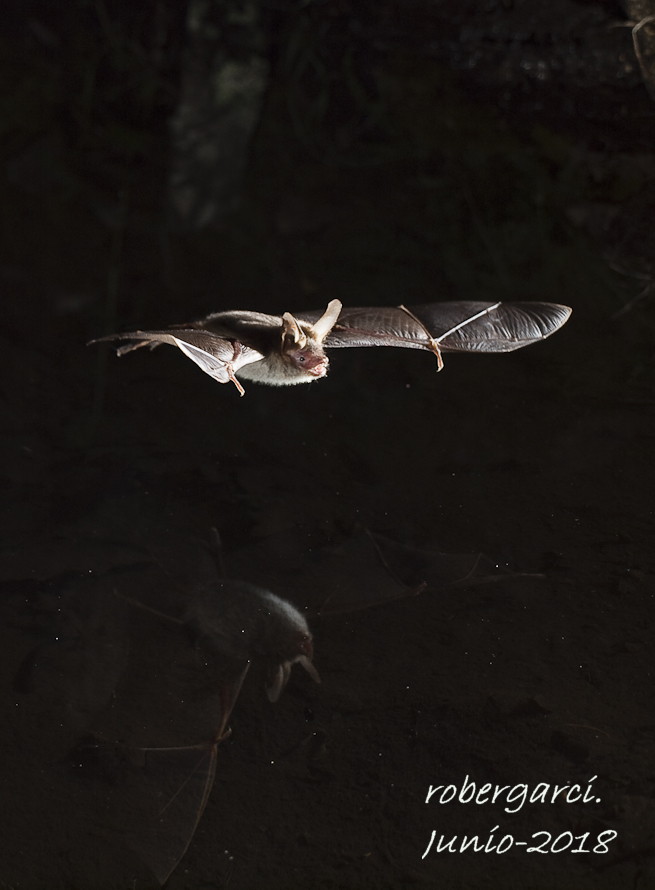
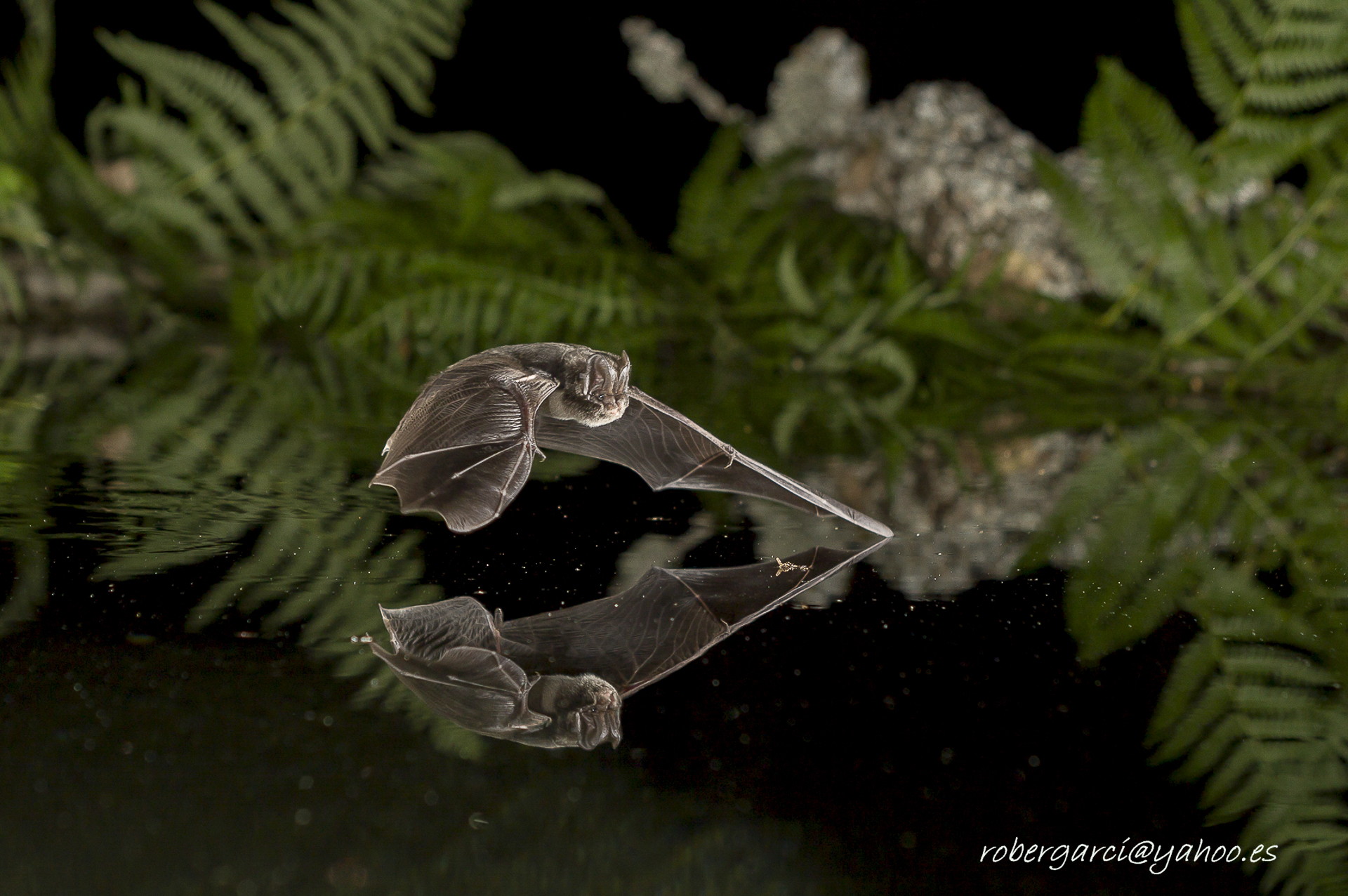
A glimpse of woodland bats. These photographs illustrate their diversity and behaviour; they are not records of occurrence in Málaga.
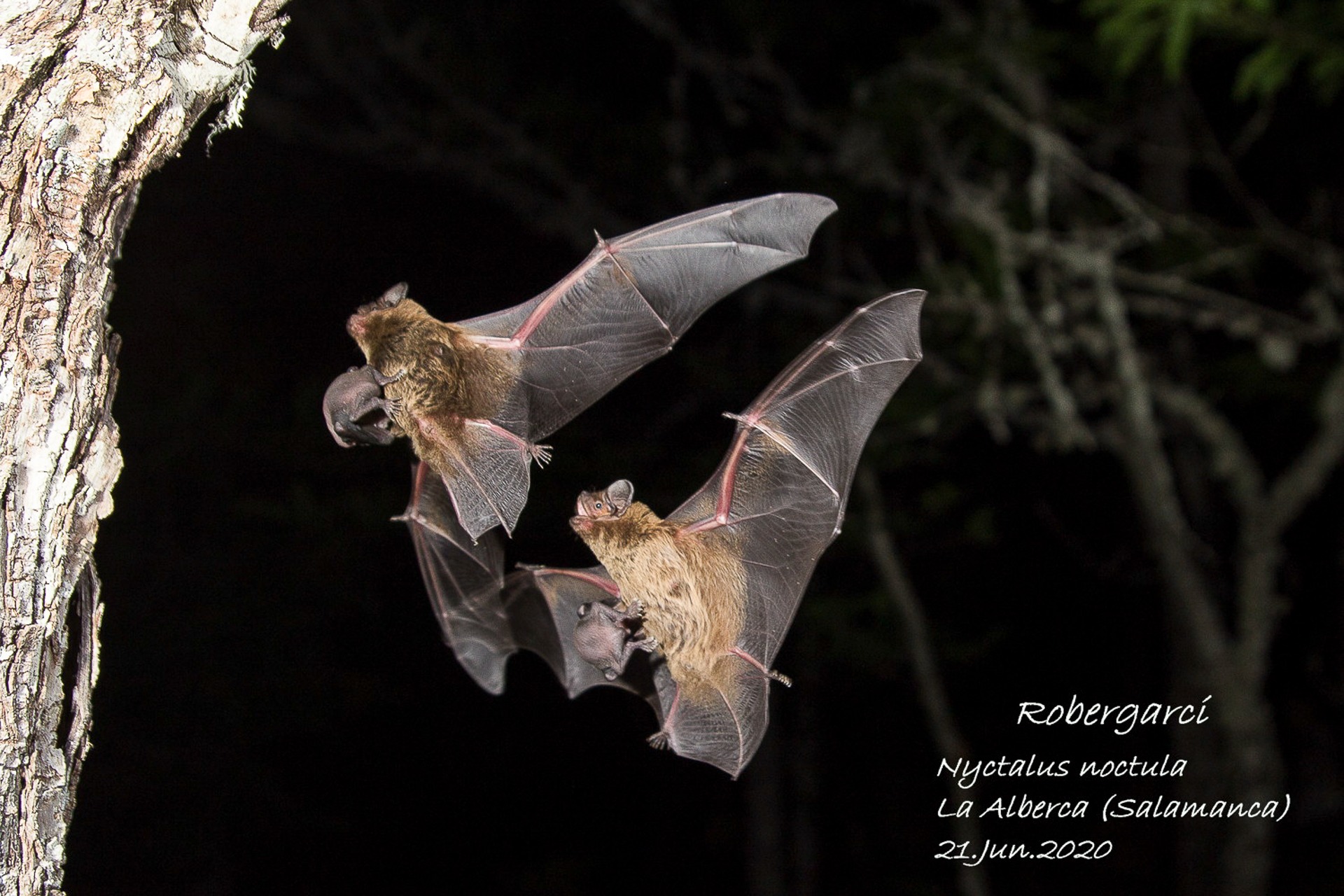
Crevice-roosting and building-associated bats · Rocks, towns and cities
These species use crevices or spaces in buildings. “Crevice-roosting” does not mean “urban”: rock faces also provide shelter, and some species use trees.
- Common pipistrelle — Pipistrellus pipistrellus
- Soprano pipistrelle — Pipistrellus pygmaeus
- Kuhl’s pipistrelle — Pipistrellus kuhlii
- Savi’s pipistrelle — Hypsugo savii
- Isabelline serotine — Cnephaeus isabellinus (Eptesicus isabellinus)
- Grey long-eared bat — Plecotus austriacus; also uses interior spaces and caves.
- European free-tailed bat — Tadarida teniotis
Conservation priority: check for colonies before renovating roofs or sealing openings.
A species connecting several habitats · Daubenton’s bat
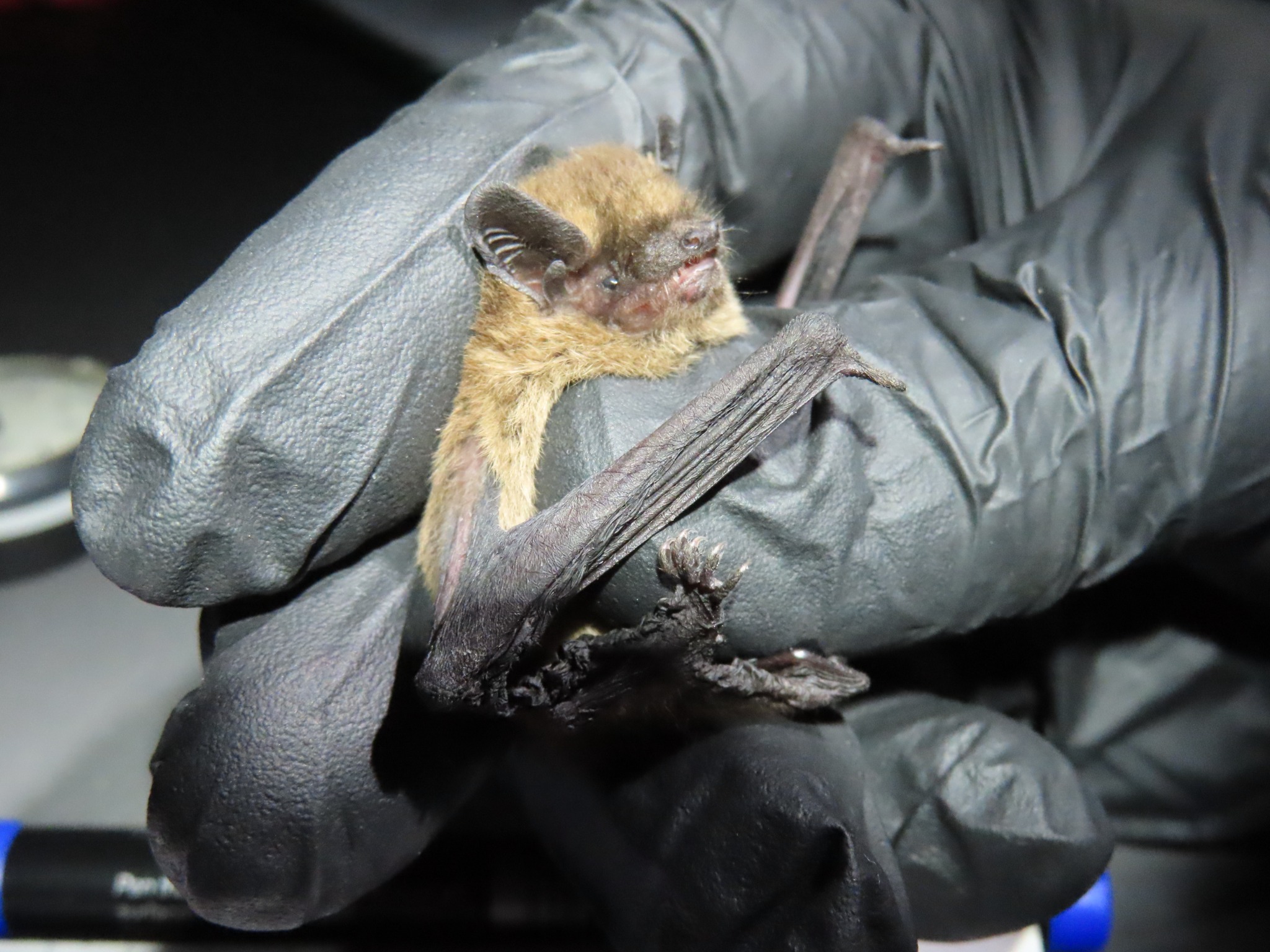
Myotis daubentonii forages close to water and uses varied roosts: trees, structures, crevices and underground sites. We therefore do not classify it as exclusively woodland, cave-dwelling or urban.
How many use caves? We highlight ten species associated with them here, but others may also use them. This grouping describes ways of life; it is neither a count of individual bats nor a definitive provincial inventory.
This broad classification draws on SECEMU (Annex I: roosts), MITECO (Daubenton’s bat) and EUROBATS (underground roosts).
Science is in the details