We collaborate with the bat research group at the Estación Biológica de Doñana (EBD-CSIC) to contribute data towards understanding and conserving the greater noctule.
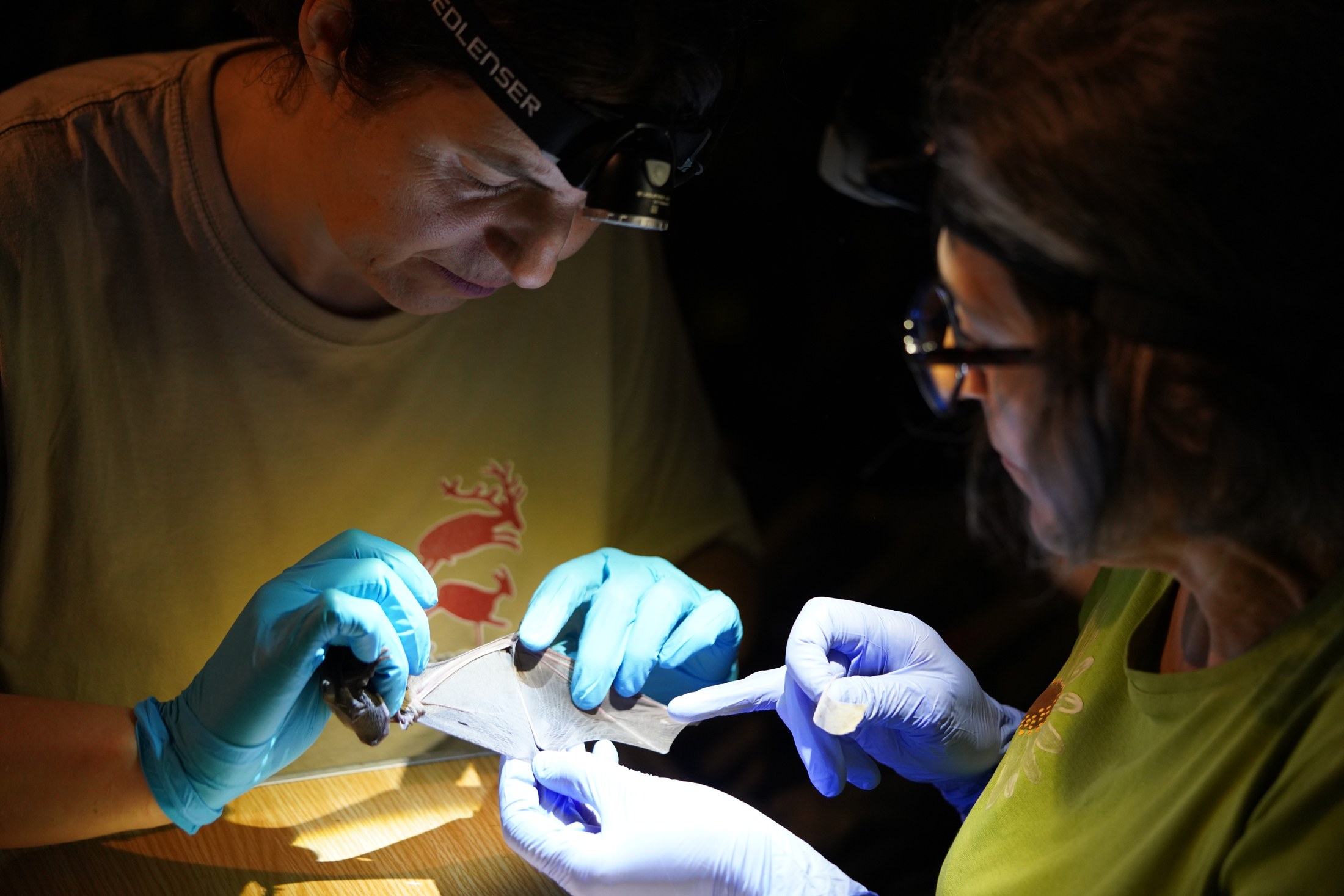
Examination of an individual by the research team. Seville · 24 June 2026.
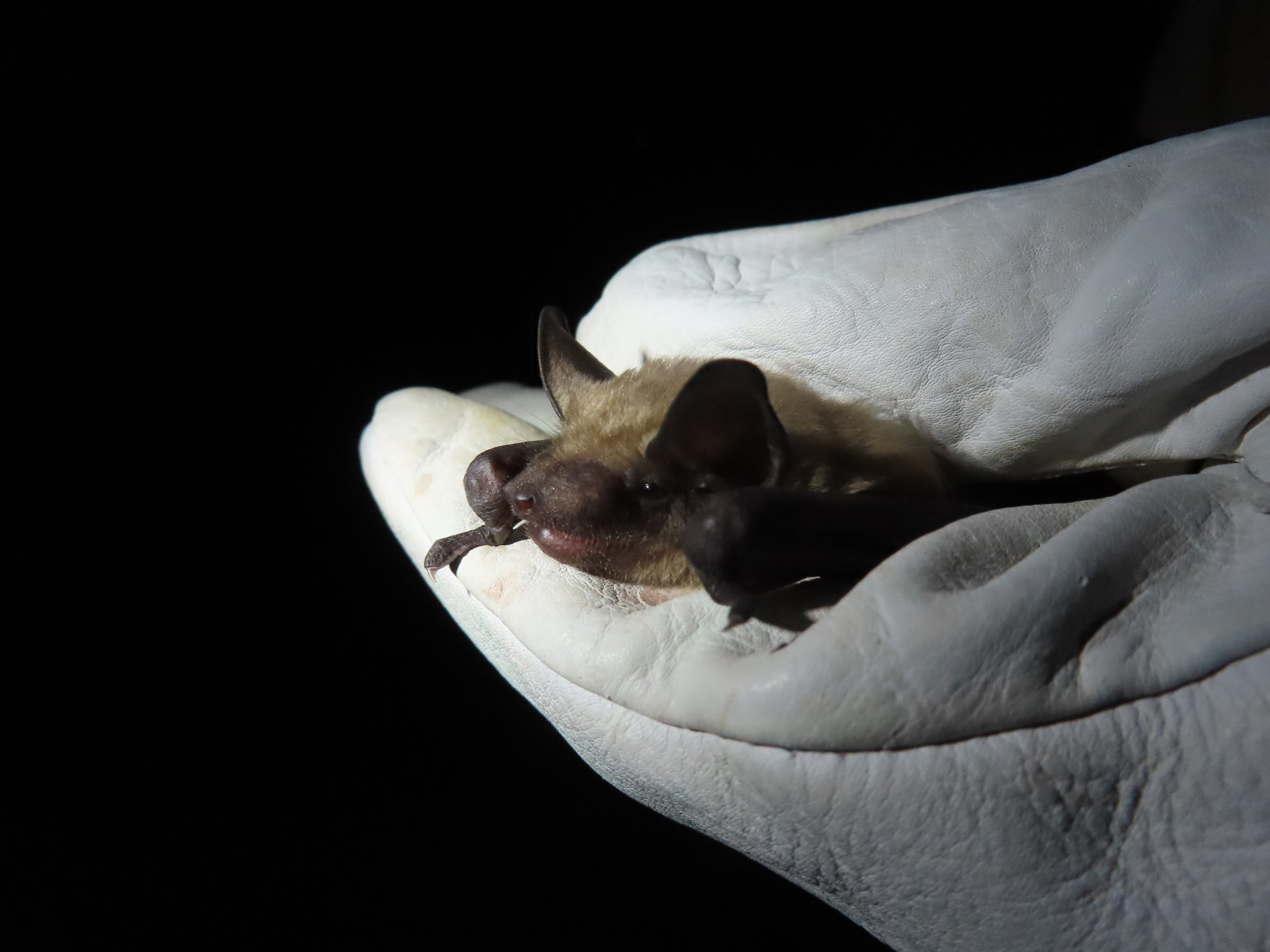
Since 2023, we have helped sample colonies of the greater noctule (Nyctalus lasiopterus) with the EBD-CSIC bat research group. Identifying individuals, taking measurements and collecting samples provide data to study their populations, assess their condition and understand the threats affecting their conservation.
This collaboration combines scientific capture, specialist handling and sample collection. During sessions shared with researchers from the Instituto de Investigación en Recursos Cinegéticos (IREC — CSIC, UCLM, JCCM), health research helps study bat health and the factors that may affect it.
Our participation
We take part in field campaigns alongside the research team, helping with mist-net capture, identification, measurements and sample collection. Each record contributes to ongoing monitoring and allows observations from different campaigns to be linked.
The contribution of Carlos Ibáñez Ulargui to our understanding of bats is a reference for those of us working to conserve them. His scientific rigour and generosity in sharing knowledge allow that contribution to grow through every research project and shared learning experience. Working alongside him is a privilege that we deeply value.
Our contribution focuses on fieldwork and the rigorous collection of information. Scientific leadership, specialist analyses and interpretation of the results are the responsibility of the research teams.
A collaboration built campaign by campaign. 23 July 2025.
A collaboration, campaign by campaign
26 July 2023 · Zoobotánico de Jerez. The first campaign in this documented collaboration: preparing nets and working at night with the research team.
24–25 July 2024 · Zoobotánico de Jerez. Continued sampling of the colony. The archive documents handling individuals, taking biometric measurements and recording data at night and in the early morning.
22–24 July 2025 · Jerez, Seville and Sierra de las Nieves. A campaign at the Zoobotánico de Jerez, María Luisa Park and Sierra de las Nieves National Park. Participation at these three sites contributes observations from different environments.
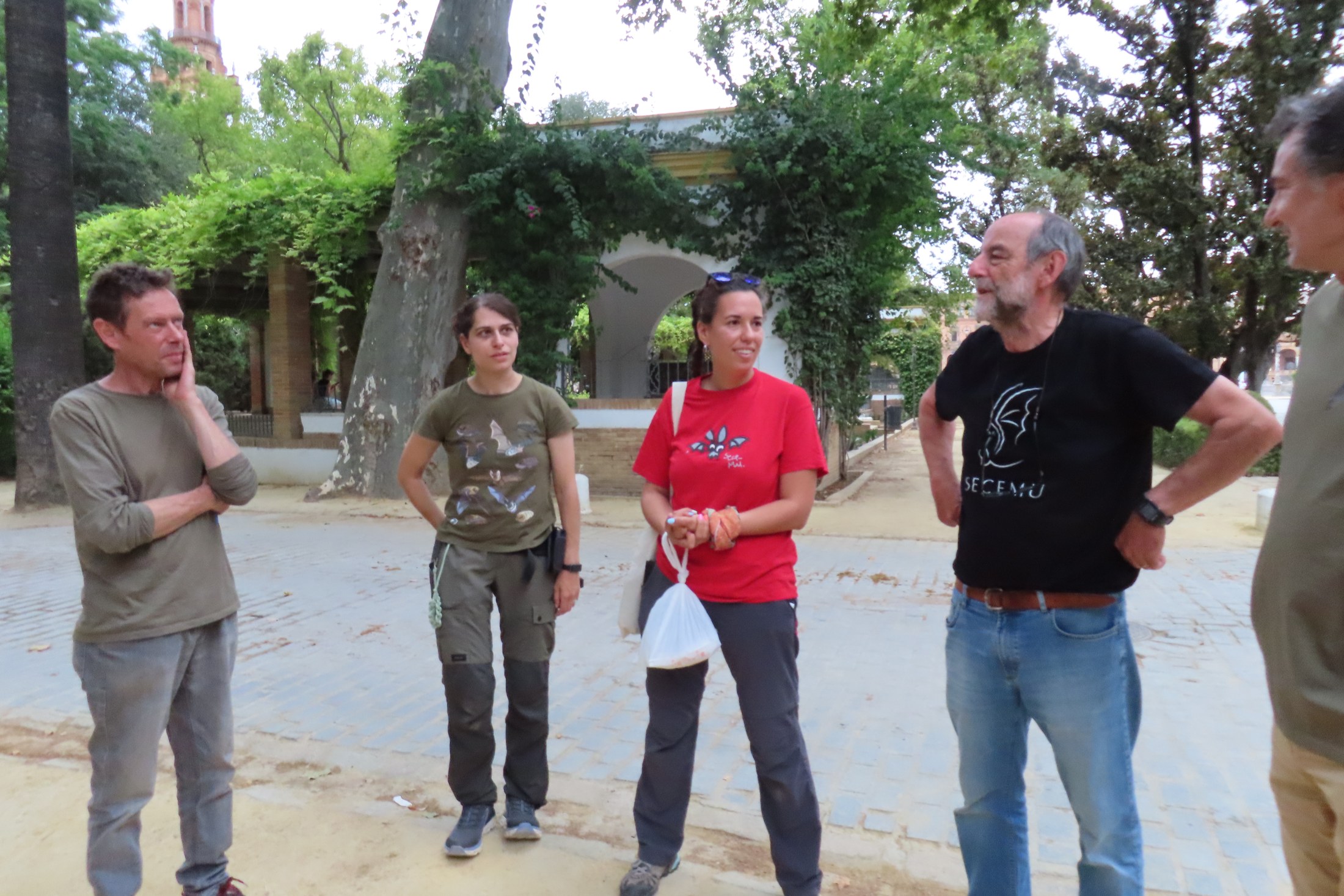
24–25 June 2026 · Seville and Jerez. Further sessions at María Luisa Park in Seville on the 24th and the Zoobotánico de Jerez on the 25th. The photographs show the continuity of teamwork and sampling.
From fieldwork to data
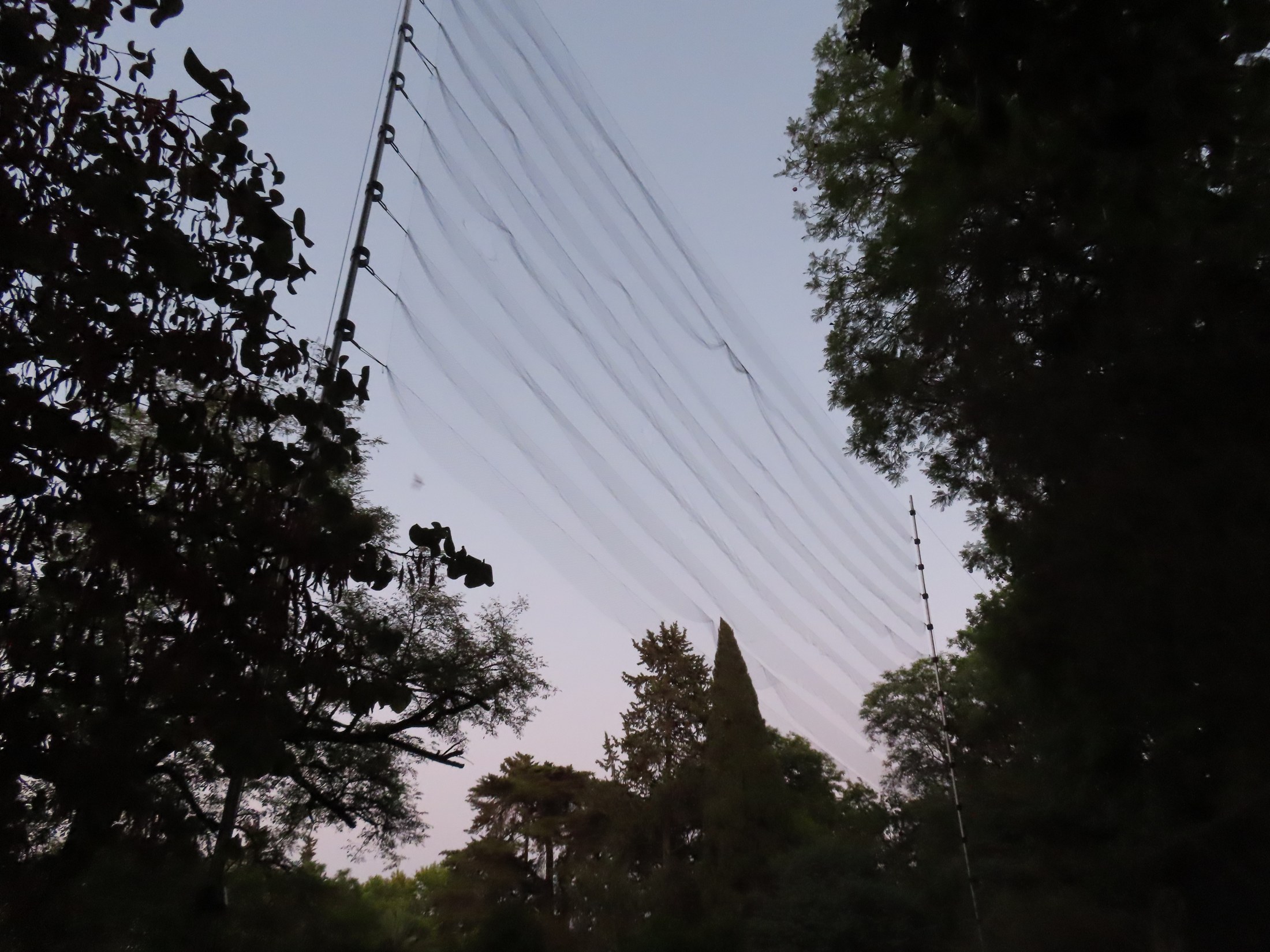
Preparing for scientific capture at dusk. Jerez · 26 July 2023.
Scientific capture
Mist nets are used to sample colonies. Preparing and checking them requires team coordination and specialist handling of captured individuals.
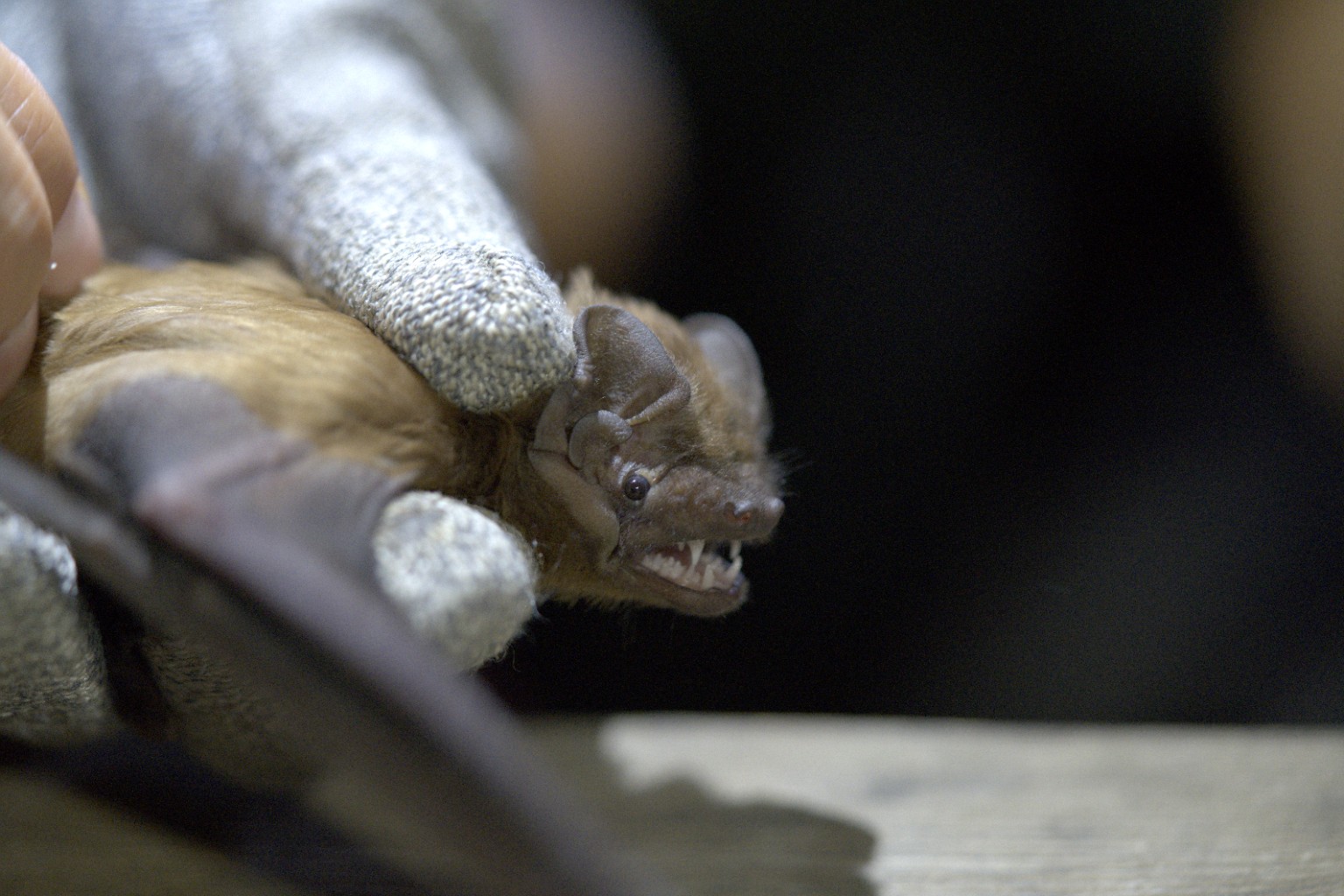
Observation and identification during scientific handling. Jerez · 24 July 2024.
Identification and monitoring
Identification and ringing allow each individual to be linked to its monitoring history. Recording captures and recaptures provides continuity between campaigns.
Biometrics
Body measurements, such as forearm length, are entered on sampling records. Recording information consistently allows observations to be compared across individuals and campaigns.
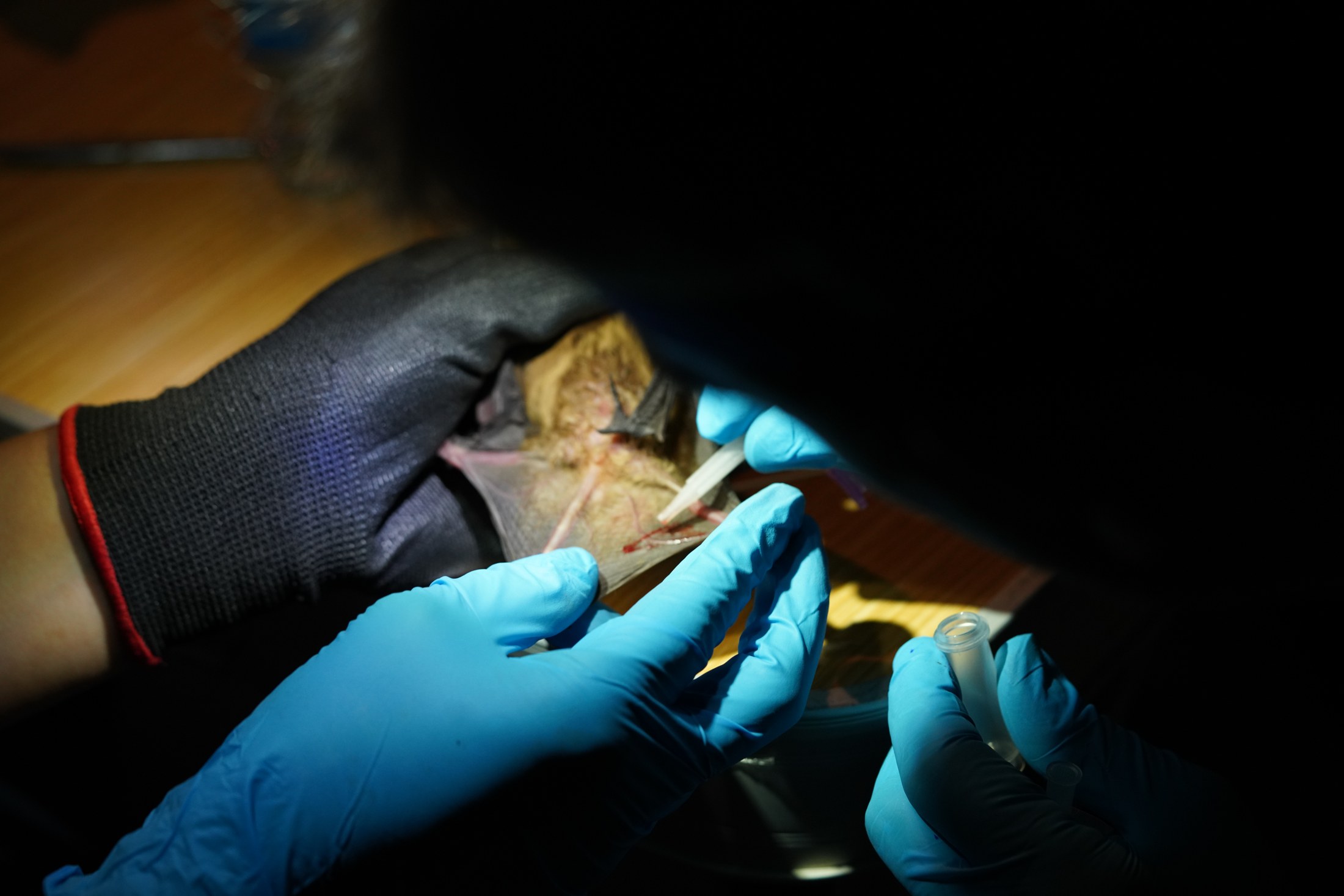
Blood sampling for health research. Seville · 24 June 2026.
Samples for health research
Collecting samples, including blood samples, provides material for the research team’s health studies. Their analysis helps answer questions about health status and the presence of agents that may affect populations.
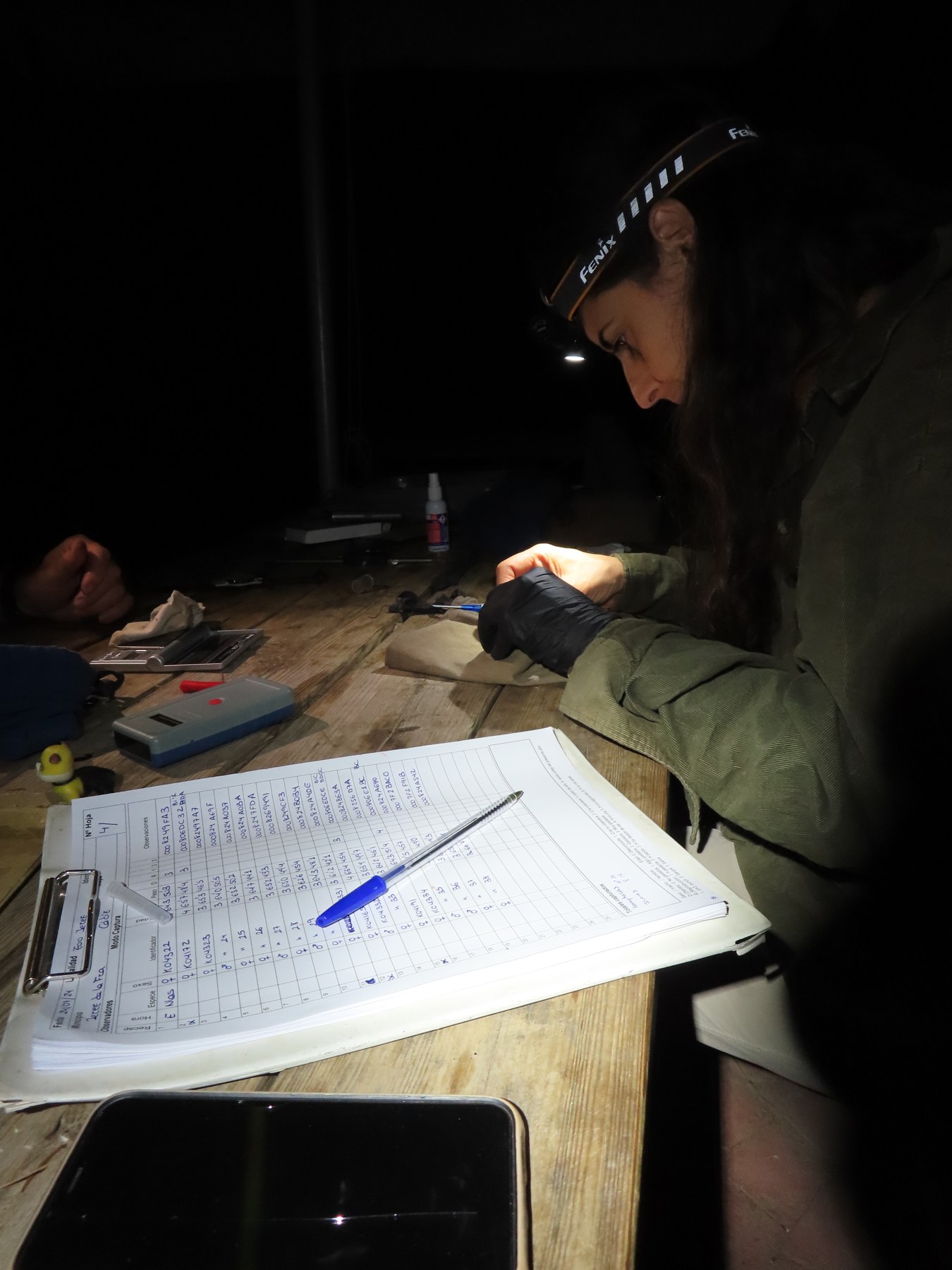
Each individual linked to its field record. Jerez · early morning of 25 July 2024.
Every sample needs a record
Work continues at the field table: identifying the individual, taking measurements, making notes and matching these to the samples. This traceability allows data to be interpreted and information to be retrieved during subsequent reviews.
Health research is part of conservation. Understanding the condition of populations helps identify threats and guide monitoring. Field data acquire meaning alongside analyses and scientific interpretation.
Training and rigour
Handling and sample collection are research techniques that require trained personnel, animal welfare protocols and the relevant authorisations.
A closer look at the sampling
Observing an individual with protective gloves.
Understanding to conserve
The value of this collaboration lies in turning fieldwork into useful research information. Maintaining monitoring between campaigns helps improve our understanding of bats and provides a scientific basis for guiding their conservation.
Reference documentation: report by Carlos Ibáñez Ulargui (EBD-CSIC, 26 June 2026), IFAPA training certificate (29 July 2025) and the photographic archive of the campaigns. Image dates have been checked against the files and their original folders.